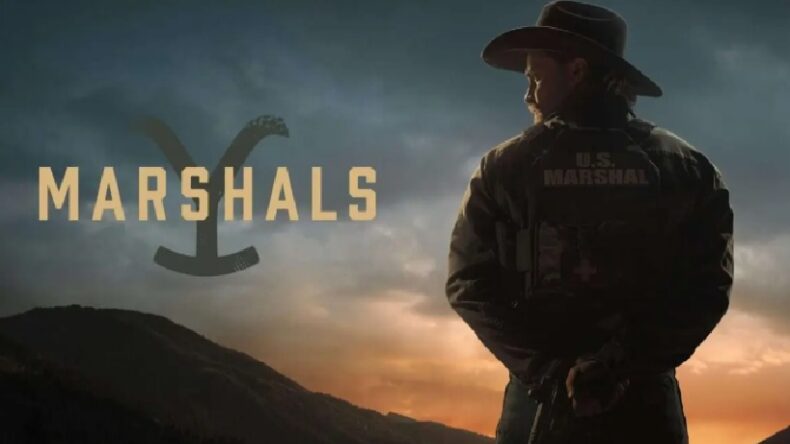
Marshals Season One Review: Trading the Ranch for the Badge
The Yellowstone universe has officially expanded to network television. Premiering in March 2026, Marshals marks a distinct pivot for the beloved franchise. Taking Kayce Dutton off the ranch and placing him directly into the line of fire as a U.S. Marshal, the CBS spinoff trades sprawling family melodrama for structured, case-of-the-week police work. With staggering debut numbers of over 20 million viewers and an immediate green light for season two, the series is an undeniable commercial juggernaut. Creatively, however, it is a fascinating, sometimes rocky transition from premium cable grit to broadcast television formula.
A New Frontier for Kayce Dutton
At the center of the series is Luke Grimes, reprising his role as the youngest Dutton sibling. Following the explosive finale of its parent show, Kayce has left the family ranch behind to join an elite Marshals task force in Montana. The premise leans heavily on his dual background as a cowboy and a former Navy SEAL, allowing him to track fugitives across rugged terrain while executing high-level tactical raids.
Grimes brings his trademark stoic intensity to the screen. Without the constant shadow of the Dutton family civil war hanging over him, he gets the chance to anchor a narrative on his own merits. His dynamic with his son, Tate (Brecken Merrill), continues to ground the character, while the conspicuous absence of his wife, Monica, hangs heavily over the first half of the season, giving Kayce an isolated, hardened edge.
The Ensemble and the Action
Showrunner Spencer Hudnut injects a distinct military precision into the series. The show operates as an ensemble procedural, pairing Kayce with a varied team of law enforcement veterans.
- Pete Calvin (Logan Marshall-Green): A cynical but highly capable operative who often clashes with Kayce over protocol.
- Belle Skinner (Arielle Kebbel): A sharp investigator who keeps the team anchored during chaotic field operations.
- Miles Kittle (Tatanka Means): A marshal whose Native American heritage adds much-needed local perspective to their jurisdictional battles.
- Andrea Cruz (Ash Santos): The tactical support keeping the unit moving.
Familiar faces Thomas Rainwater (Gil Birmingham) and Mo (Mo Brings Plenty) bridge the gap between the old world and the new, reminding viewers of the political complexities still brewing in Montana. Guest star Riley Green also makes a memorable impression as Garrett, a former SEAL wrestling with his own demons.
Action sequences are a major highlight. Instead of lingering on boardroom politics, Marshals delivers intense, masterfully choreographed shootouts. The production uses sweeping Utah and Montana landscapes to stage massive vehicular pursuits and tactical takedowns. These set pieces are polished and kinetic, making the most of the network television budget.
The Procedural Pivot
The most divisive element of Marshals is its structure. If the original series was a sprawling modern Western epic, this spinoff is essentially a high-stakes cop show. Fans expecting deep, slow-burn character studies might feel a bit shortchanged by the rapid pacing. Conflicts are often introduced, escalated, and resolved within a strict one-hour timeframe.
Because it airs on CBS, the trademark brutality and profanity of the franchise have been noticeably sanitized. The show attempts to maintain a gritty atmosphere, but it occasionally slips into familiar television tropes. Kayce and his team gear up, kick down doors, debrief at their trendy headquarters, and repeat the cycle. Even the darker elements feel slightly repackaged for a broader audience. For example, the infamous train station concept from the flagship series has been reimagined here as dropping bodies in a remote canyon, but the moral weight of those actions is sometimes glossed over in the rush to wrap up the episode.
The Verdict So Far
Over halfway into its 13-episode freshman run, Marshals is still finding its footing. It is a sturdy, highly watchable action drama that benefits immensely from stunning cinematography and Grimes holding the center. While it lacks the unpredictable danger of early Yellowstone, it offers a streamlined, incredibly well-executed police procedural.
For viewers looking for complex, morally grey Western mythology, the transition to network television might feel a bit tame. But for fans who simply want to see Kayce Dutton use his unique skill set to bring justice to the Montana wilderness, the series delivers exactly what it promises. It is a rugged, fast-paced ride that proves the Dutton legacy is far from over.


The Pitt

Season 2 of Percy Jackson and the Olympians

Welcome to Derry

HULU ORIGINAL SERIES “A Thoushand Blows”

SDCC 2025: Inside the Peacemaker Panel That Left Fans Speechless